- Welcome To OTIA Sports!

The world of sports memorabilia was rocked this week after Indiana authorities identified Brett Lemieux, a well-known autograph dealer, as the man found dead during a police raid targeting a counterfeit memorabilia scheme in Westfield. Lemieux, 45, was at the center of an alleged fraud that may have altered the sports collectibles market for years.
While the Hamilton County Coroner’s Office has not yet released an official cause of death, Westfield police say Lemieux died of a self-inflicted gunshot wound as officers executed a search warrant connected to a multi-million dollar fake sports memorabilia ring.
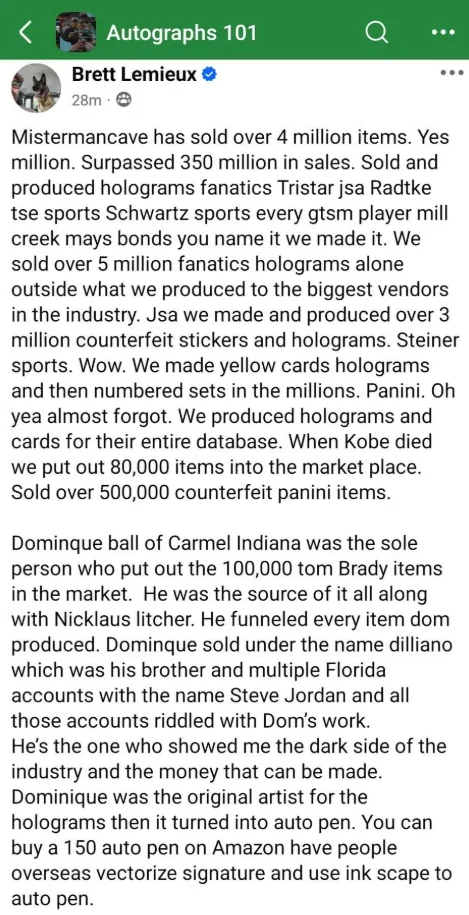
The scandal erupted after a post attributed to Lemieux appeared in the “Autographs 101” Facebook group, where he confessed to orchestrating a counterfeit operation that reportedly pushed more than four million fake sports items into the market, with claims of $350 million in sales. Collectors and industry insiders say the post sent shockwaves through the autograph community, raising serious questions about the authenticity of countless items currently in circulation.
Lemieux operated under the business name Mister Mancave, which advertised itself as having “the largest framed jersey inventory on the web.” Despite listing a Columbus, Ohio address, no records show an actual storefront there, and Mister Mancave was incorporated twice in Indiana between 2018 and 2023.
According to Lemieux’s alleged confession, his operation specialized in forging the hologram stickers used by major authentication companies like Panini, Fanatics, Tri-Star, James Spence Authentics, and others. After the tragic death of Kobe Bryant in 2020, Lemieux claimed to have released 80,000 fake Bryant items into the market, many featuring what appeared to be legitimate authentication holograms.
The fake memorabilia wasn’t just limited to basketball. Lemieux’s website, for example, offered an Aaron Judge-signed baseball with a Fanatics hologram for $399—substantially less than the $699 price at Fanatics. These deals, which undercut official autograph dealers, raised suspicions but managed to fly under the radar thanks to the forged stickers.
Industry leaders are now scrambling to rebuild trust. Fanatics, a major player in the authentication space, says it overhauled its hologram technology two years ago to combat counterfeiting, and continues to work with law enforcement and fraud experts—including former FBI agents—to keep fakes out of collectors’ hands.
While the figures Lemieux cited in his post have been met with skepticism—one competitor called the $350 million sales number “impossible”—there’s no denying the damage caused. Steve Grad, a respected expert in autograph authentication, notes that sophisticated forgery methods, like autopens, make it harder than ever to spot fakes, and that the ripple effects of this case will be felt for years.
Some in the industry say they weren’t surprised. “He had autographs from athletes who hadn’t done signings in years,” said one dealer. Others named in Lemieux’s so-called “manifesto,” including Indiana dealer Dominique Ball and Wisconsin’s Nickolas Litscher, have denied any involvement, with Litscher preparing legal action after his name surfaced online.
Authorities believe Lemieux and his network operated under several business names across various selling platforms, including Ultimate Sports, Athletes One, Signature Dog, and All-American Authentics.
As law enforcement and the hobby grapple with the fallout, collectors are left questioning the authenticity of their prized memorabilia. The scandal serves as a wake-up call for the sports collectibles market, highlighting the need for constant vigilance and ever-evolving fraud prevention.