- Welcome To OTIA Sports!

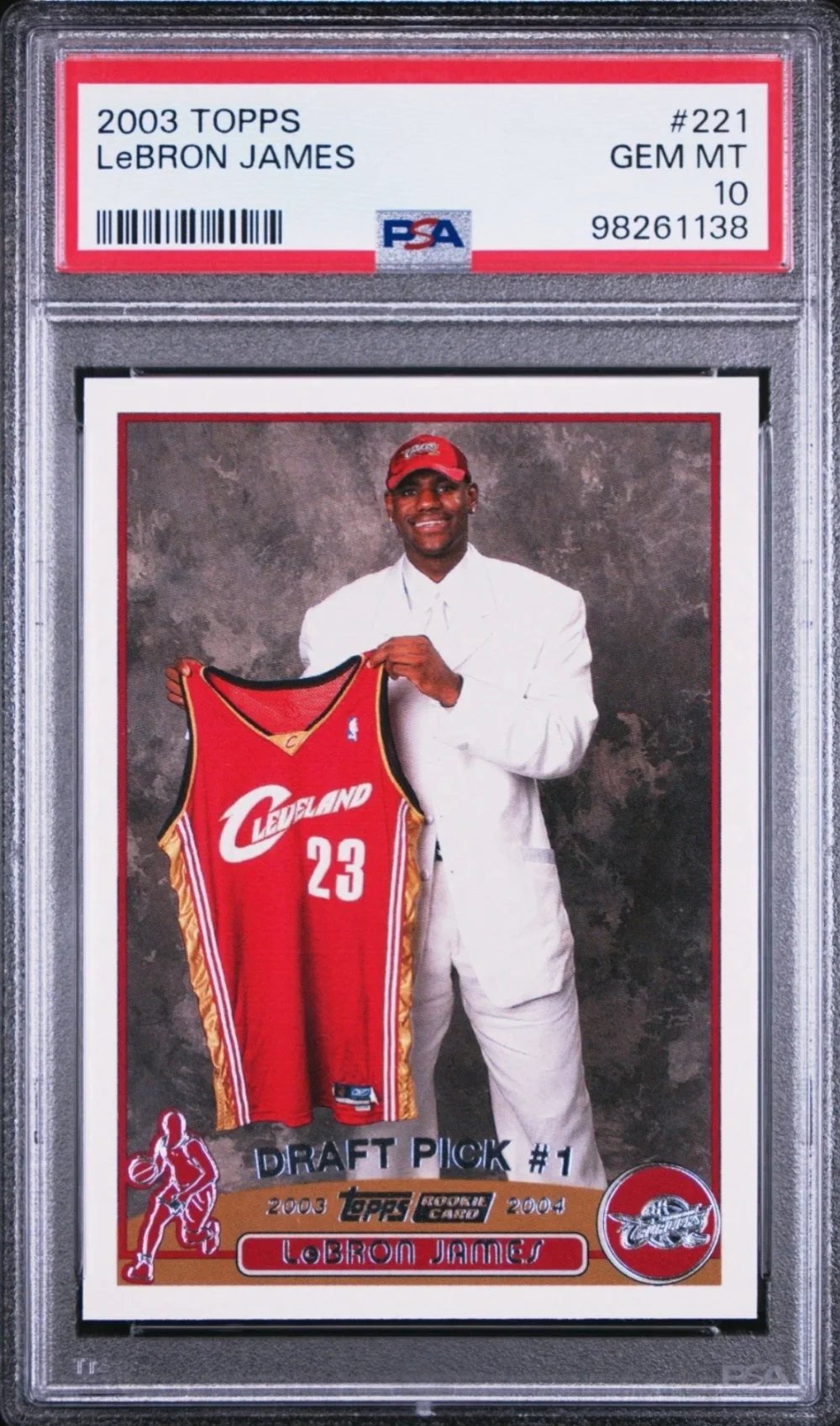
The 2003 Topps LeBron James rookie, card 221, is one of those pieces that never drifts far from the center of the hobby. It bridges eras: classic paper Topps on one side, the chrome wave on the other. You can probably picture the photo without trying. It’s also the card friends bring up when they’re easing back into collecting and ask, “What should I start with?”
Sure, there are flashier and scarcer LeBron rookies. But the Topps base is the one that taught a lot of people what a cornerstone feels like. There’s enough supply to make the chase realistic across grades, and enough demand that clean copies don’t linger. Lately, the market has made that clear. Through mid-August 2025, eBay auctions for PSA 10s clustered right around two thousand to two thousand one hundred dollars, with hammers at roughly two thousand on August 6, two thousand fifty on August 9, two thousand seventy-six and two thousand thirty and change on August 13, and two thousand one hundred seventy-five on August 18. That’s about as tidy a comp band as you’ll find for a card this visible.
Zoom out a bit and the floor looks sturdy. Card Ladder showed a late-August PSA 10 sale at two thousand five hundred thirty-one, a touch above the usual eBay finishes but in step with the gentle uptrend since spring. Nothing wild, just steady action supported by real volume.
Topps didn’t stop at the base, either. The paper family that matters includes the Black Border parallel numbered to five hundred, the Gold to ninety-nine, and the First Edition stamp that scratches the scarcity itch without jumping to the serial-numbered tiers. Those three, alongside the base, are the versions you’ll keep seeing in price tools and checklists.
There’s also the Topps Collection photo variation from the factory set. It’s a bit of a quirky cousin with its own image and a smaller footprint. In gem mint it usually trails the base, but it gives set builders a way to stay in the flagship lane while taking a slight detour.
Grading realities shape the conversation. The PSA 10 population is healthy, which is why the card trades like a blue chip rather than a ghost. Even so, the spread from PSA 9 to PSA 10 is real in both dollars and psychology. If you’re easing in, raws have been living in the 250–300 range lately, and PSA 9s tend to hover in the four hundreds. That raw window shifts with centering and surface, so clear photos and seller feedback matter more here than enthusiasm.
If you live by comps, the playbook this month is simple. Watch evening eBay auctions for PSA 10s, expect most to settle near two grand to two-one, and be ready for the occasional jump when two determined bidders refuse to blink. It’s a great card to study price action on because the liquidity is deep and the eyeballs are constant.
Paper vs. chrome is a debate that never ends with this rookie class. Chrome refractors are the peacocks, no doubt. But the paper Topps base is the version that sat in binders, starter stacks, and retail memories from the mid-2000s. You don’t have to choose, but if you do, the paper tells a longer story about how the hobby crossed from one era to the next. Guides from places like Cardboard Connection have been saying that for years, putting the Topps paper right near the top of any essential LeBron list.
Centering is the quirk most people bring up. White borders make it easy to spot a left rail that’s a little tight, and on the Black Border parallel every tiny edge nick turns into a billboard. That’s why crisp corners and honest edges matter more than usual. It’s also why a truly sharp 10 still gives you that jolt when you see one that feels like it earned every point.
Different budgets have clean paths. A strong PSA 9 lets you enjoy the flagship look at roughly half the gem price and remains easy to move later. A well-centered raw can be a satisfying grade-and-hold project. If you’re wired for scarcity, the First Edition stamp brings difficulty without the Black and Gold premiums. The point isn’t to chase what the internet says is best; it’s to match your style to the version that feels right in your hand.
And yes, you can actually pull one in the wild. Our Galaxy Rip Packs have included 2003 Topps LeBrons in the mix, which is exactly why we curate them the way we do—real chase moments without turning the product into wishful thinking. The pool rotates, but the possibility is there, and the pop when it happens is the whole reason ripping is fun.
The nice thing about writing this in 2025 is that the card’s case doesn’t need hype. The reputation is settled. A quick look at the checklist, a glance at recent bidding, and a reminder of how many different collectors this card satisfies is enough. Whether you stash one long-term, trade into one after a few shows, or try to rip your way there, it’s hard to find a more dependable basketball card to build around. And if your lane takes you to its siblings—the numbered Black and Gold or the First Edition—you’re still orbiting the same planet that keeps the hobby in its pull.